20190324_130745

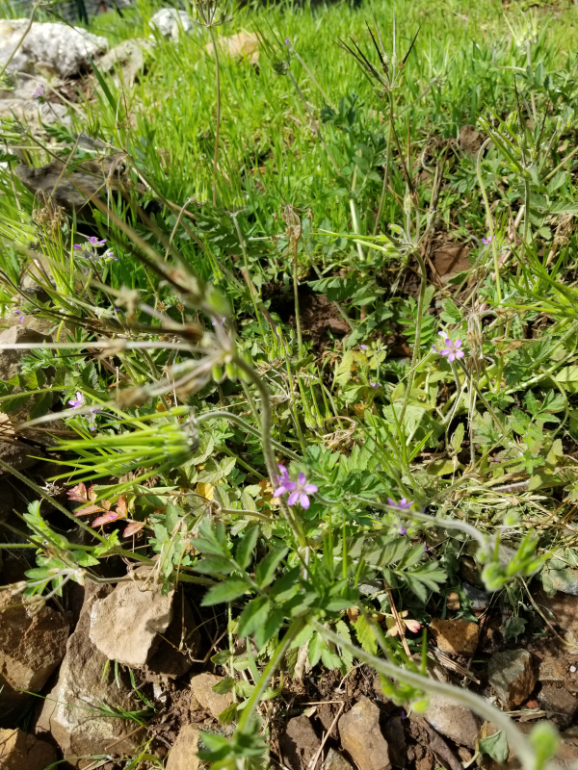
a couple weeks ago i took the chance and dared to transplant this Storks Bill.  It had found it's place in the Wall Garden bed at some point last summer or fall or even early winter?   I found it down where last garden's bell peppers had been.  About a foot wide already.  flourishing.   They become large,  as in wide and tall plants.  The wall garden is for food.  for the domestic.    Storks Bill is wild.  I was afraid it would not tolerate being transplanted.   At that time,  it was,  as far as i could see,  the only of it's kind.   But i did it.   It didn't miss a beat.  Continued blooming,  continued producing the seed pods in it's new place in the Dye Plant Garden at B.  


20190404_153416


20190404_153742

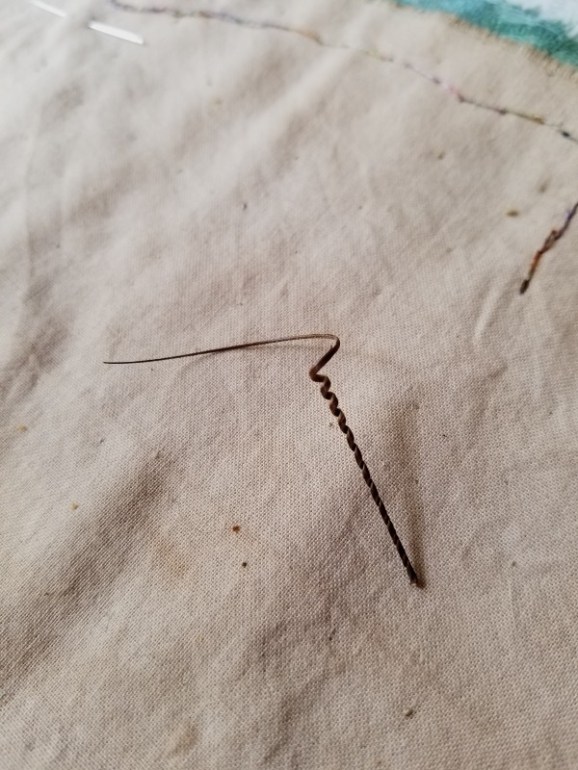
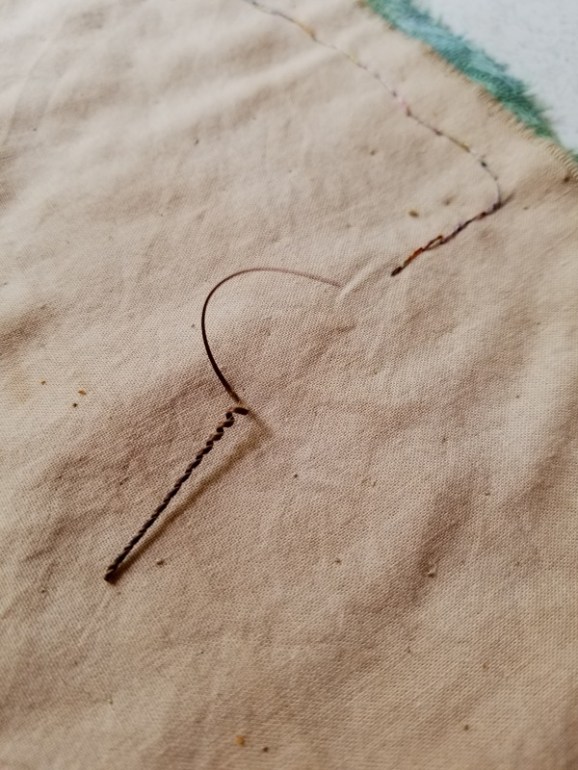
i wrote last year about how Alyssia and i were startled by MANY of these standing upright,  turning, turning,  their spiraling corkscrew turning  in to the soil…how at first we thought they were some kind of strange insects as we watched them spin,  we saw that they were seeds,  we saw more being released from the pods.  Really,  nothing less than a Magic Show.  They are as slender as a sewing needle,  the curve at the top,  a very fine sewing needle.

as the days have gone on,  i find more and more plants.  MANY MANY have found their place.  I am so careFULL walking.  They're everywhere.   And remember,  i read that they give Green color as a dye plant?  

Posted in

17 responses to “the Amazement”

  1. Mo Crow Avatar

    ah, your beautiful spiral is the seed pod if the Stork’s Bill, just had a quick look online and love that it’s food for you and bees!
    “The entire plant is edible with a flavor similar to sharp parsley if picked young. According to John Lovell’s Honey Plants of North America (1926), “the pink flowers are a valuable source of honey (nectar), and also furnish much pollen”.

    Like

  2. grace Forrest Avatar

    Mo..can you put link? I’d not read edible before

    Like

  3. Deb G Avatar

    Oh isn’t that wonderful?! Out walking the garden tonight I noticed the hops are rising.

    Like

  4. joanne Avatar
    joanne

    That is the most amazing seed. I would be happy to watch the wind twirl it into the Earth.

    Like

  5. Michelle Slater Avatar

    Glory Glory in every step!

    Like

  6. Marti Avatar
    Marti

    Waiting for greening here…ornamental pear trees have bloomed with white blossoms but I can’t dye with white. Lilac bushes are setting forth luscious green leaves and already see first clumps of lilacs forming. Chinese Pistache trees are bursting with firecracker buds that will form into long leaves. Did some snipping of lilac leaves, salvia greggi, some catnip and also weeded; so many varied shades of green from the weeds. All of these goodies were bundled into two long strips of cloth, plunked into a glass jar and set outside on my little dye table. This morning, my world is softly colored green as both bundles are grabbing that elusivecolor. This will do and is a fine beginning while I wait for the land here to awaken to blooming so I can begin my dye foraging.

    Like

  7. Judith Casteel Avatar
    Judith Casteel

    Hi Marti, Don’t know if you’ll remember me…I used to comment a lot when Grace was in New Mexico. Anyway, life got in the way for some years and am starting to reenter. I recall you sometimes came out to CA…that’s where I am now over a couple of mountain ranges due west of Grace. I forage a lot here for my dye pots..would love to hear what you find in your neighborhood to compare to mine. I did a study in 2012, ee gads that’s 7 yrs. ago, and got a nice range of shades. Anyone else in Graces’ circle a natural dyer ??

    Like

  8. jude Avatar

    very reassuring

    Like

  9. Marti Avatar
    Marti

    Hi Judith, I do remember you and welcome back.
    I live at 5,290 elevation in central New Mexico, about 80 miles from where grace used to live in Polvadera. I forage mainly on the sandy and dusty trails around my neighborhood but once in a while we head out to the Sandia Mountains or to Taos for windfall bark or lichen. I pretty much try anything for dyeing and that includes some non plant materials such as old discarded rusty pipes, bolts, washers, etc. that my nephew likes to surprise me with, as well as strands of steel wool mixed in with plant material; sometimes I simply need the drama that these materials provide!
    When we first moved to New Mexico, I was so happy to be here that I even dyed with chili powder, marvelous rusty red color and the smell of the cloth, well, if I were starving, I would eat the cloth but over time, the color faded. I have also been known to take cloth, bundle it with whatever I find and wrap it in corn husks to see if they make any markings…no they don’t but that’s just fine because the world of foraging and naturally dyeing is like going on a never ending treasure hunt.
    For me, the hunt for foraged materials is always done with the hope that I will find that one plant that will give me glorious greens, my favorite color. So far though, my best greens have come from simply using red onion with a splash of vinegar in a copper pot.
    My usual plant materials consist of chamisa (gives yellow, green and black colors but I’ve only been able to get yellow and some green),coreopsis, cosmos sagebrush, desert willow blossoms, sunflower petals and centers, smoke bush leaves, walnuts, acorns, bark from grapevines as well as red twig dogwood, leaves from Chinese Pistache trees and ornamental pear trees, Spanish broom, juniper, sumac, salvia greggi and marigolds.
    A few years ago I spent a few days camping out at grace’s home in Polvadera and was able to gather elderberry, coralberry, iris, lavender and mimosa pods to dye with. The cloth colors ranged from a peachy beige to light green, soft purple and the iris, well the dried iris blossoms gave me what I call poor woman’s indigo and I even got blue fingers…
    One of my dye treasures is a book on Navajo dyes and this year I am on the hunt for cota which grows wild here, gives a good golden color. I get yellow from other plants but I want less of a bright yellow. I would also like to find wild privet because when the berries become ripe in August, they give a good gray color…I can get gray from using iron but want to see the color variation from the wild privet. Finally, I think I am going to plant some Hopi dye sunflowers this year instead of my usual miniature autumnal ones to see if they will give me black. The only time I got black was when I used pomegranate skins in a rusted enamel pot.

    Like

  10. grace Forrest Avatar

    a new question has arisen….there is
    California Cranesbill
    different cousin, native to this Sierra Nevada
    ?????

    Like

  11. grace Forrest Avatar

    You RE~MIND!!!! Kristen saying Hops draws aphids away
    from broccoli and cauliflower….need to get some
    planted!!!!!

    Like

  12. grace Forrest Avatar

    i’ll send seed…

    Like

  13. grace Forrest Avatar

    as i walked yesterday, i thought of you saying this,
    could hear your voice
    Love

    Like

  14. grace Forrest Avatar

    yes…reassurance abounds!

    Like

  15. Mo Crow Avatar

    I would ask the local permaculture people

    Like

  16. Judith Casteel Avatar
    Judith Casteel

    What wonderful information…thank you for sharing. I’m going to print this out.

    Like

Leave a comment