a good good day.


IMG_8078f

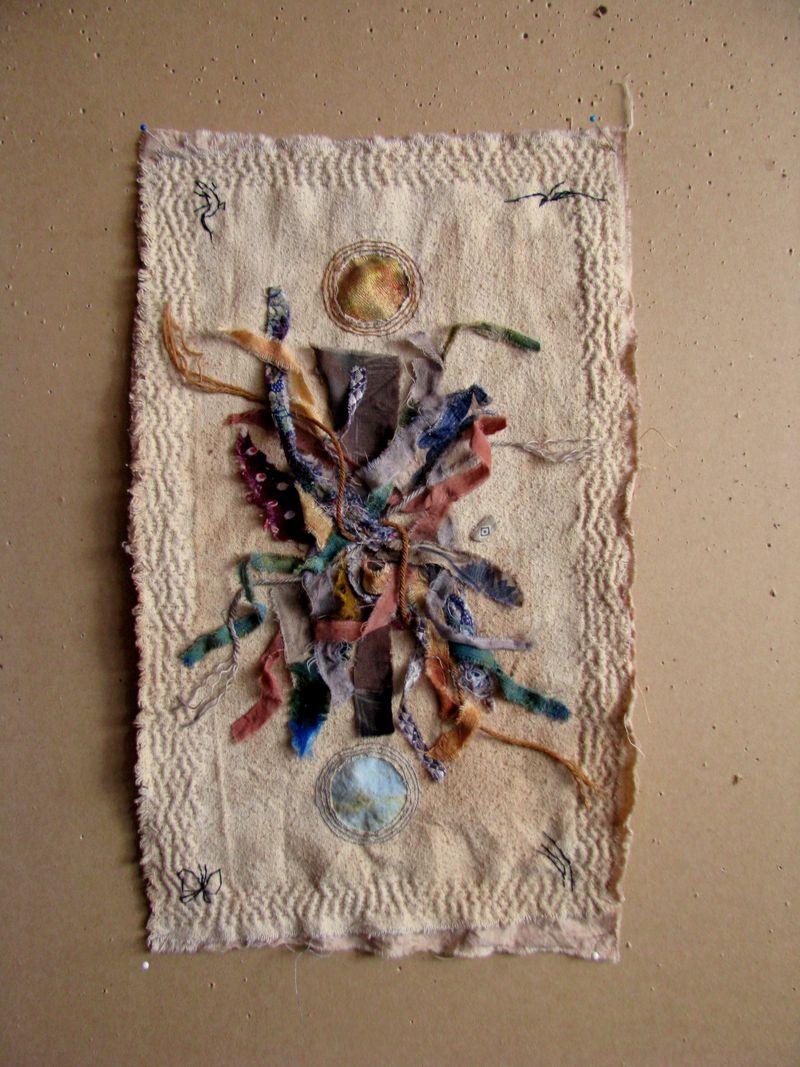
the Cloth led the day.  "this.  this.  this."  and i did these.  it is Good.  very very good.  not finished, but no more to add.  just finish what was asked for today.  ok.

and got a load of grass hay,  cleared the way for it,  and got, on loan, amazingly, the book that the Mustang woman has written.  in the very beginning there is this.

"Study the species of animal you plan to train.  Find an ethogram (list of typical behaviors) and try to create a catalog of photos of your animal doing species-typical behaviors.  If you can't find a prepared ethogram, make your own by developing a list of behaviors and a description of what you actually see when the animal is doing them (try to avoid speculating about why).

Find  video clips of this species both in the wild and interacting with humans, and then scrutinize them for typical behaviors.  Take notes and become fluent talking about your species.  The more you know about your animal's species, the less you are going to have to reinvent the wheel.

Nature has endowed your animal with a rich evolutionary history behind it's behavioral repertoire.  Use it, if you can.  Going against Mother Nature is the hard road.

ZEBRA Threat Behavior Ethogram                                                                                                                                        Kick threat:                                                                                                                                                                                       Presents rump while swishing tail, while facing away.  lifts a hind hoof one or more times, then             continues turning to face threat.                                                                                                                                          Bite threat:                                                                                                                                                                                       Puts ears back against neck, flips lips, exposing teeth, swishing tail with force.

The emotional states of many animals are easily recognizable.  Their faces, their eyes, and the ways in which they carry themselves can be used to make strong inferences about what they are feeling.  Changes in muscle tone, posture, gait, facial expression, eye size and gaze, vocalizations, and odors, singly and together indicate emotional responses to certain situations.  What does this type of animal look like when it is relaxed?  What does it look like when it is afraid?  What do they do when they panic?  Try noticing fine details.

You especially need to know what your animal is likely to do when it is uncomfortable, about to make a run for it, or about to attack you.  Imagine that you are training a pig and it is standing with its head low and swinging side to side.  What is going to happen next?  You could be bitten if you don't figure it out quickly!"


Posted in

20 responses to “343”

  1. julie Avatar
    julie

    My first reaction to her chapter was to think of all those things with respect to my husband! But I am being serious, it is about making conscious all the subconscious information acquired through intimacy, isn’t it, whether dog, zebra, horse, goat…or a man.

    Like

  2. grace Avatar

    julie, YES. SO yes. yes it is. and how we go so FAST and don’t
    acknowledge things to any Real degree, whether it’s a dog, zebra, horse, goat or a husband or wife.
    just take things for granted…as in if we don’t get bitten
    but getting bitten is the extreme in emotional state for all of the above too…except for Goats…i don’t think they ever bite? maybe
    they do. or can? something to know.
    and i think about Snowbunny, the GrandMatriarch, who stood her
    ground to the German Shepards that took one of Jenny’s newborn kids
    away. How WAS it she got her face, neck and breast all torn open?
    What exactly did she DO? maybe she even tried to BITE the dogs?
    there clearly was close combat….not just a fleeting moment, but
    close and engaged.
    i love very much all these ideas that are arising. of going
    so much way DEEPER into my relationship with these Goats, in being to Them what they might really appreciate for Their Own Wellbeing…

    Like

  3. Michelle in NYC Avatar

    Nice…those four black marks–lizard, crow, being and ‘whatever’ that right bottom mark is. The four corners in any direction still readable. Lovely.
    As for learninG the animals…”try to avoid speculating about why” SEEMS LIKE REALLY GOOD ADVICE. I note the way people interpret behavior. We all filter through our expectations and experiences. One friend used constantly to ascribe all sorts of outrageous reasons for her dogs behaviors (stealing food from peoples groceries), like that he was doing it to get her attention or to dominate her. She often projected those reasons…but she never trained her dog to actually listen to her. Not so with you. You really notice the details I think, and are very good at just describing them.

    Like

  4. patricia Avatar

    just had this image of the ripple effect– horse and goats–and people–watching their environment. acting. reacting. understanding. and it seems so clear that a higher intelligence may be watching it all. as in, “do the watching ripples ever end?” and i’m thinking “Yes”–ripples–a cloth of ripples.

    Like

  5. Cynthia Avatar
    Cynthia

    ripples of delight just seeing and looking and reading here

    Like

  6. Jan Avatar
    Jan

    maybe “older” intelligence rather than higher. love,

    Like

  7. beth Avatar

    hey grace. I’ve been unplugged for a bit of time. So much to catch up on here, to sit with, and think about… I’m very much looking forward to hearing about your visit with the mustang woman. Love.

    Like

  8. grace Avatar

    tomorrow is almost here

    Like

  9. Tracy Leppold Avatar

    I’ve been studying the cats my whole life. Sometimes it feels like I’m getting close. This is such good advice, not reading anything into it. Except sometimes it’s obvious what they’re doing, like when they sit in front of their food dishes and wait to be noticed. Animal ethnography, how exciting.
    I love your cloth. It’s very good.

    Like

  10. Dana Avatar

    Grace, this cloth is very beautiful. I love the stitching around the sun and moon, the kantha edging, and the little caligraphic notes in the corners. All grounds for the centrifugal center. Its quite moving.

    Like

  11. grace Avatar

    my daughter taught me that. She is such an Intuitive
    about the Goats, interesting. that’s what she meant when
    she told me to Stop having Thoughts and Feelings when
    doing things with them. To just BE there…in that moment
    that is somewhere INBETWEEN them and you. leave yourself out of it. become the moment.

    Like

  12. grace Avatar

    being IN it. Learning it. yes. yes.

    Like

  13. grace Avatar

    isn’t that just Great?…Animal ethnography? yes!…
    just that is almost Enough….
    thanks for loving the cloth….it’s different, yes?

    Like

  14. grace Avatar

    Dana…i love that you call them caligraphic notes…love
    that term. want to work more to more closely let them
    be caligraphic

    Like

  15. Tracy Leppold Avatar

    Yes, it has color and motion. Lots of energy.

    Like

  16. grace Avatar

    and it is Enough, just as it Is.
    and how it is like WE are…Color/Motion/Energy
    right?

    Like

  17. ² Avatar
    ²

    a wise daughter you have
    she has right
    leave youself out of….
    stay just in the moment
    it is a big thing

    Like

  18. Tracy Leppold Avatar

    It is. It’s good to be able to stop when it’s done.

    Like

  19. Nancy Avatar

    I read about “The emotional states of many animals …” and I think of the conversation today at work where we voiced what triggers or behaviors we noticed before a toddler bit, hit, pinched, pulled hair etc. Seems the same to me tonight.

    Like

Leave a comment