a good good day.
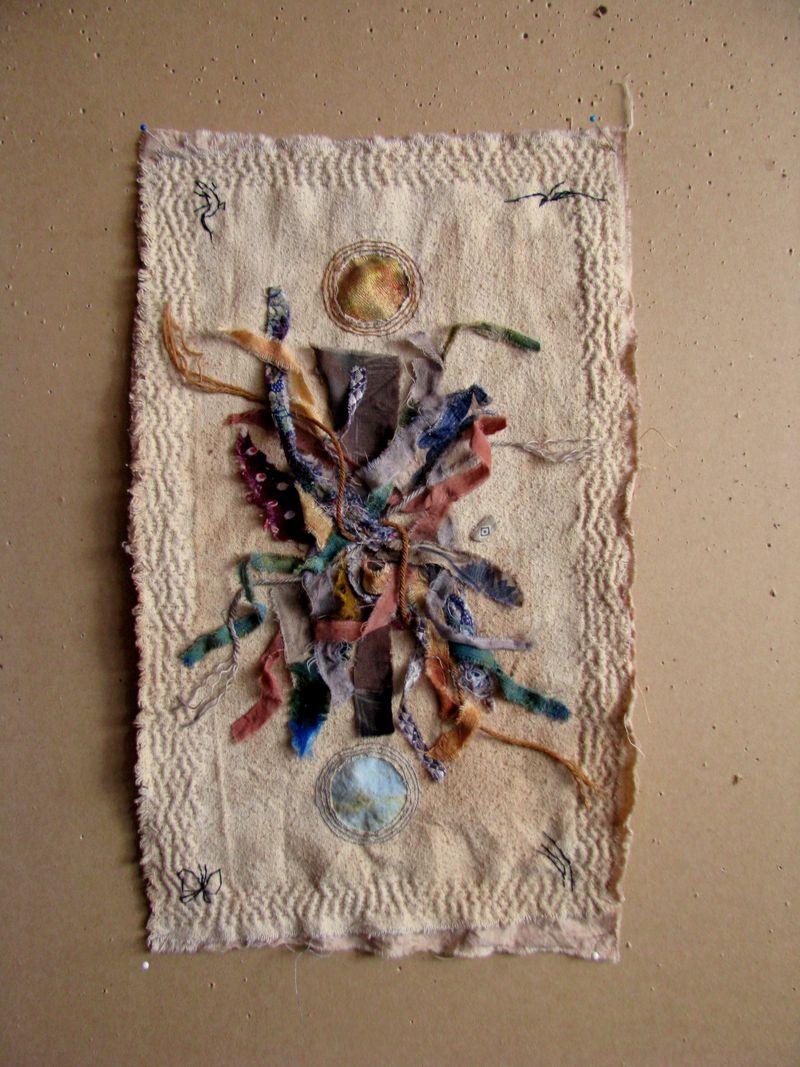
the Cloth led the day. "this. this. this." and i did these. it is Good. very very good. not finished, but no more to add. just finish what was asked for today. ok.
and got a load of grass hay, cleared the way for it, and got, on loan, amazingly, the book that the Mustang woman has written. in the very beginning there is this.
"Study the species of animal you plan to train. Find an ethogram (list of typical behaviors) and try to create a catalog of photos of your animal doing species-typical behaviors. If you can't find a prepared ethogram, make your own by developing a list of behaviors and a description of what you actually see when the animal is doing them (try to avoid speculating about why).
Find video clips of this species both in the wild and interacting with humans, and then scrutinize them for typical behaviors. Take notes and become fluent talking about your species. The more you know about your animal's species, the less you are going to have to reinvent the wheel.
Nature has endowed your animal with a rich evolutionary history behind it's behavioral repertoire. Use it, if you can. Going against Mother Nature is the hard road.
ZEBRA Threat Behavior Ethogram Kick threat: Presents rump while swishing tail, while facing away. lifts a hind hoof one or more times, then continues turning to face threat. Bite threat: Puts ears back against neck, flips lips, exposing teeth, swishing tail with force.
The emotional states of many animals are easily recognizable. Their faces, their eyes, and the ways in which they carry themselves can be used to make strong inferences about what they are feeling. Changes in muscle tone, posture, gait, facial expression, eye size and gaze, vocalizations, and odors, singly and together indicate emotional responses to certain situations. What does this type of animal look like when it is relaxed? What does it look like when it is afraid? What do they do when they panic? Try noticing fine details.
You especially need to know what your animal is likely to do when it is uncomfortable, about to make a run for it, or about to attack you. Imagine that you are training a pig and it is standing with its head low and swinging side to side. What is going to happen next? You could be bitten if you don't figure it out quickly!"


Leave a Reply